Celtic and Rangers to play next Scottish Cup matches behind closed doors 27 minutes ago Reuters

Scottish football’s oldest and fiercest rivalry has been dealt one of the most severe punishments available within the sport, after both Celtic and Rangers were ordered by the Scottish Football Association to play their next home Scottish Cup fixture entirely behind closed doors. The sanction, confirmed following a disciplinary hearing at Hampden Park, marks the culmination of months of investigation into the disorder that overshadowed last season’s Scottish Cup quarter-final at Ibrox — a night that came far closer to genuine tragedy than most supporters, on either side of the divide, may have realized at the time.
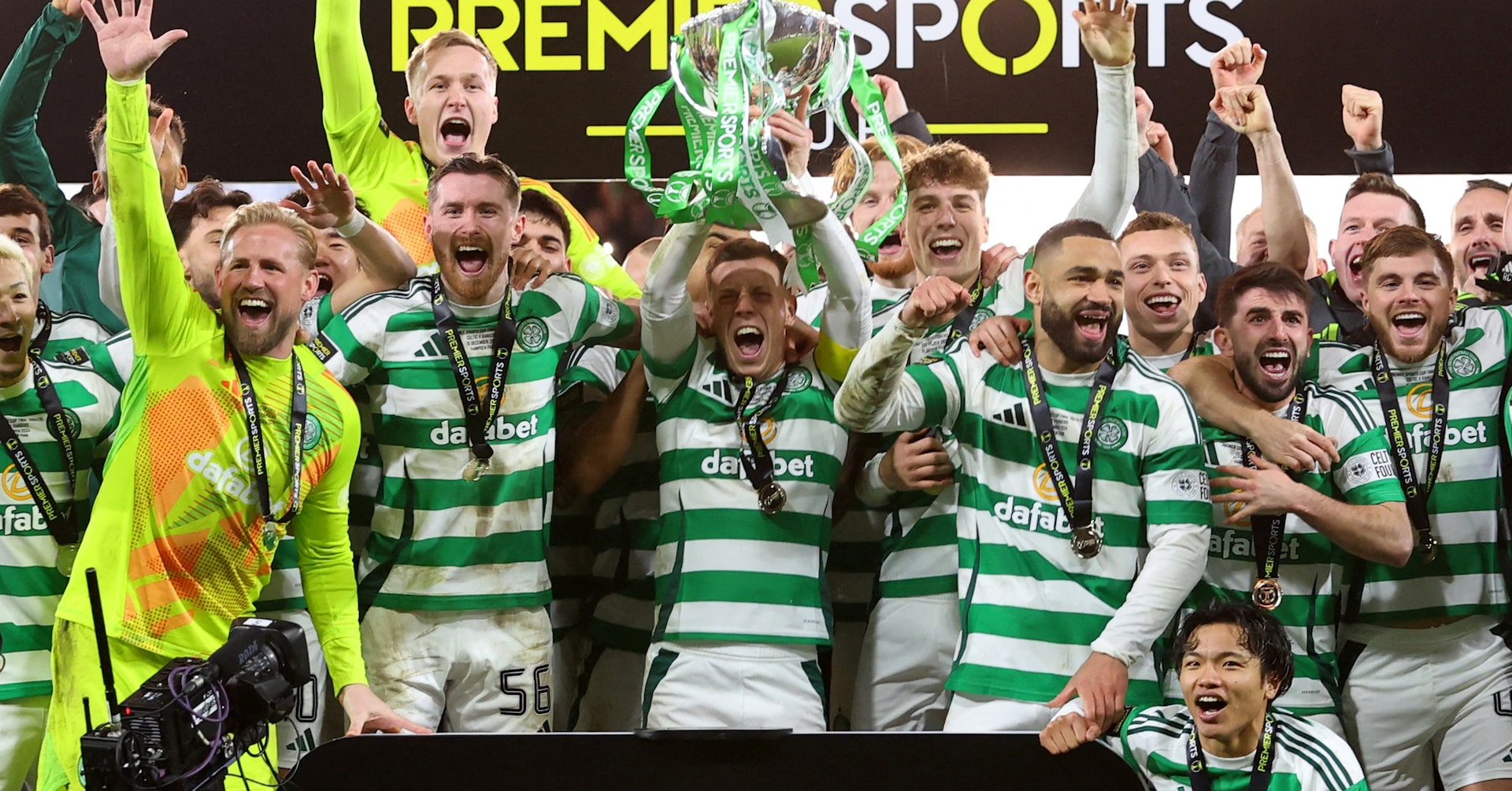
To understand the severity of the punishment, it’s worth revisiting exactly what unfolded on the night in question. Celtic and Rangers met in the quarter-final of the Scottish Cup at Ibrox, in a tie that finished goalless after ninety minutes and went to a penalty shoot-out. Celtic emerged victorious 4-2 from the spot, securing their passage to the semi-finals. What should have been a straightforward, if tense, conclusion to a cup tie instead descended into scenes of genuine danger.
As Celtic celebrated their shoot-out win, supporters — reportedly Celtic’s Ultras contingent initially — spilled onto the Ibrox pitch in jubilation. Others followed their lead, and the celebratory pitch invasion quickly provoked a hostile response from sections of the home support, with Rangers’ Union Bears group responding in a manner an independent SFA review would later describe as reactionary, confrontational, and overtly threatening. What followed was chaos: fans from both sides clashing directly on the pitch, missiles including pyrotechnics being thrown, and police required to intervene to separate supporters and restore order.
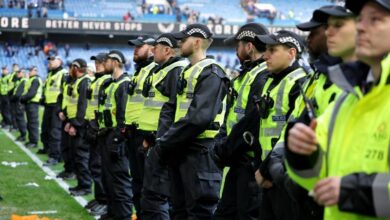
The human cost of that disorder was significant. Thirty-seven arrests were made in the aftermath. Officers attempting to police the situation were assaulted, as were supporters, members of coaching staff, and even players caught up in the confrontation. In one of the more distressing details to emerge from the incident, a ten-year-old child attending the match was struck by a coin thrown from the stands or the pitch area amid the disorder — a detail that speaks to just how indiscriminately dangerous the situation became, extending harm well beyond those actively involved in the clashes
The severity of the SFA’s response only becomes fully explicable once the findings of the independent review into the incident are considered. That review concluded that the scenes at Ibrox came within a genuinely narrow margin of producing what it explicitly termed “life-threatening” violence and “crushing” — language rarely used in football disciplinary findings, and language that underscores just how close the situation came to a genuine catastrophe rather than merely an ugly, regrettable pitch invasion.
According to the review’s timeline, it took four minutes and twenty-eight seconds for police to re-establish control once the disorder broke out. In the context of a crowd situation involving thousands of people in a confined stadium environment, with supporters from opposing groups in direct physical proximity, four and a half minutes is an eternity — more than enough time for a manageable situation to spiral into something far more serious, and evidently close to doing exactly that on the night.
The review’s specific findings on culpability are notable for apportioning responsibility to both sets of supporters, rather than treating the incident as one side’s provocation met by the other’s restrained response. Celtic Ultras were identified as the first to enter the pitch, in what the review characterized as an act of jubilation following the shoot-out win — an initial incursion that, on its own, might have been treated as a relatively containable breach of protocol, the kind of celebratory pitch encroachment that, while against the rules, happens periodically in football without escalating into genuine danger. But the review found that Rangers’ own hardcore support responded to that initial incursion in a manner that was reactionary, confrontational, and overtly threatening — transforming what might have remained a one-sided embarrassment into a genuine two-way confrontation with real potential for serious injury.
Both clubs faced formal SFA charges relating to a failure to prevent “unacceptable conduct” among their respective supporters — the standard charge used in Scottish football disciplinary proceedings when crowd behavior breaches accepted standards, regardless of which specific fans initiated the trouble. Both Celtic and Rangers admitted those charges rather than contesting them at a hearing held at Hampden Park on 13 August, avoiding a longer, more adversarial disciplinary process but still leaving the specific sanction to be determined by the panel.
The sanctions ultimately handed down were significant, running across three distinct components. First, and most immediately consequential, both clubs’ next home Scottish Cup match must be played entirely behind closed doors — no home fans, no away fans, with access restricted to television broadcast crews and essential operational staff only. This is, by explicit description within Scottish football’s disciplinary framework, the most severe sanction available short of outright expulsion from the competition, a marker of just how seriously the panel treated the findings of “life-threatening” risk identified in the independent review.
Second, both clubs must make a compensatory payment of £100,000 to whichever team they are drawn against in that fixture, intended to offset the away side’s lost gate revenue from a match that will generate no ticket sales for either travelling or home supporters. That payment must be completed within 30 days of the match’s conclusion.
Third, and perhaps most significant for the longer-term implications of the ruling, the panel imposed a suspended sanction: a further home Scottish Cup match for either club will automatically be played behind closed doors, without need for a fresh disciplinary hearing, if there is any repeat of “unacceptable conduct” among that club’s supporters in a Scottish Cup fixture between now and the conclusion of the 2027/28 season. In effect, both clubs are now operating under a multi-season probationary period specific to the Scottish Cup, with a serious and immediate consequence hanging over any future incident, however it might arise.
Both clubs retain a formal right to appeal the ruling, though as of the time of reporting neither has indicated an intention to do so, beyond Celtic’s public criticism of the sanction’s proportionality.
Celtic’s response to the ruling was notably pointed. In an official statement, the club described itself as “shocked” by what it called a “disproportionate punishment for a relatively small incursion by supporters at a moment of emotion and celebration.” The framing here is significant — Celtic’s statement draws a clear distinction between what it characterizes as a limited, celebratory pitch encroachment by its own support, understandable if not excusable in the immediate emotional aftermath of a dramatic shoot-out win, and the broader disorder that the SFA’s sanction appears to treat as a single, shared incident of collective failure by both clubs.
The statement went on to stress that Celtic has never defended supporters entering the field of play, and pointed to a pattern of the club having repeatedly taken disciplinary or preventative action in the past when such incidents have occurred — an attempt, it would seem, to establish the club’s broader institutional track record on crowd management as evidence against the idea that this was a case of Celtic tolerating or failing to address a known problem. At the same time, the statement acknowledged the role emotion plays in moments of that kind, striking a note that tried to balance genuine contrition with a defense of the specific severity of the sanction imposed.
Rangers, notably, have been less vocal publicly in the immediate aftermath of the ruling, a contrast that may reflect the fact that, per the independent review’s own findings, it was the response from Rangers’ own hardcore support to the initial Celtic incursion that was characterized in the more alarming terms — reactionary, confrontational, overtly threatening — making a robust public defense of proportionality a considerably harder position for the Ibrox club to stake out.
Beyond the two clubs directly involved, the ruling has prompted broader reflection on crowd safety and stadium management within Scottish football. Keith Wyness, the former Aberdeen chief executive, described the stadium closure sanction as “the ultimate sanction” available to Scottish football’s governing body, and warned that continued trouble at Old Firm fixtures could result in even further bans being imposed in future, extending beyond just the Scottish Cup should patterns of disorder persist.
That warning carries weight given the specific structure of the suspended sanction attached to this ruling — a second closed-doors Scottish Cup match, automatically triggered by any repeat incident, effectively puts both clubs on a form of disciplinary probation running through two full further seasons. It’s a structure clearly designed to create a strong deterrent effect, removing any ambiguity about consequences should similar scenes recur, while also serving notice that Scottish football’s governing body views this as a systemic issue requiring sustained behavioral change rather than a single punishable incident to be dealt with and then set aside.
None of this unfolds in a vacuum. The Old Firm rivalry between Celtic and Rangers has, for generations, carried a reputation — deserved or otherwise depending on the specific era and incident under discussion — as one of the most combustible fixtures in European football, shaped by a complex intersection of sporting rivalry, religious and sectarian history, and deep-rooted communal identity that extends well beyond the touchline. Flashpoints involving supporter disorder, sectarian chanting, and periodic crowd trouble have punctuated the fixture’s history repeatedly over the decades, and Scottish football’s authorities have experimented with various approaches to managing the inherent tensions of the derby — from reduced away allocations, to enhanced policing presence, to periods of essentially eliminating away support altogether at certain fixtures.
That last point is directly relevant to the current controversy. March’s quarter-final was notable specifically because Celtic had been given the full Broomloan Stand allocation at Ibrox — approximately 7,500 away tickets, the largest allocation given to Celtic supporters at Ibrox since 2018. That decision to significantly expand the away allocation, taken specifically to comply with Scottish Cup competition rules around ticket distribution between competing clubs, represented a departure from the far more restrictive allocations that have become the norm for Premiership league fixtures between the two sides in recent years, where away allocations have often been negotiated down to a fraction of that size — sometimes as low as 750 tickets, occasionally reduced to zero entirely, depending on the specific fixture and the state of relations between the two clubs’ hierarchies at any given moment.
The following weekend’s Premiership meeting between the clubs, played under the more typical, heavily restricted away-allocation arrangement of around 2,500 travelling fans, passed without the same scale of disorder — a contrast that has not gone unnoticed by observers considering what, if any, lessons should be drawn about away-fan allocation policy at Old Firm fixtures going forward.
Because the sanction applies specifically and only to each club’s next home Scottish Cup fixture, its real-world impact depends heavily on the draw for this season’s competition, and on how far both clubs progress. Based on the typical structure of the Scottish Cup calendar, the punishment is likely to take effect around the fourth-round stage, expected in the middle of January — assuming, of course, that both Celtic and Rangers navigate the earlier rounds successfully and are drawn at home when the sanction comes due.
There’s an inherent unpredictability built into that timeline. If either club is drawn away from home at the point their sanction would otherwise apply, the closed-doors punishment would presumably roll forward to their next home Scottish Cup tie thereafter, whenever that occurs — potentially pushing the actual empty-stadium fixture even later into the season, or, in a scenario where a club is eliminated from the competition before ever playing another home tie, raising genuine questions about whether the sanction would need to be carried over into a future season’s competition to be properly served.
What’s entirely unaffected by the ruling, importantly, are the clubs’ other scheduled meetings this season, which will proceed with normal crowd arrangements. Rangers host Celtic in the Scottish League Cup quarter-final on Sunday 13 September — a fixture that, coming so soon after this ruling, will likely be watched closely by both the SFA and the wider footballing public for any sign of continued tension or difficulty in crowd management, even though the specific sanction imposed doesn’t technically apply to that competition. A week later, on Sunday 20 September, the sides meet again in the Premiership, in what will be the first league Old Firm fixture of the season and a nationally televised occasion given its live broadcast slot.
Beyond the immediate disciplinary and safety implications, there’s a meaningful financial dimension to this ruling that shouldn’t be overlooked. A behind-closed-doors Old Firm Scottish Cup fixture represents a substantial loss of matchday revenue for both clubs — gate receipts from an Old Firm fixture, historically among the best-attended and most lucrative domestic fixtures either club plays in a given season, will simply not materialize for whichever tie ends up affected. The £100,000 compensation payment to the away side only partially offsets that loss, and only for the side that would otherwise have traveled; it does nothing to compensate the home club’s own lost gate revenue, hospitality income, and matchday commercial activity, all of which will effectively evaporate for that fixture.
There are broadcast considerations too. Both Sky Sports and other broadcast partners covering Scottish football have built commercial arrangements substantially around the drawing power of Old Firm fixtures specifically, and while television cameras will still be present at the closed-doors match, ensuring the fixture itself can still be broadcast and consumed by viewers unable to attend, the complete absence of any crowd atmosphere — no chanting, no crowd noise, no visual spectacle of a packed stadium — represents a genuinely different product for broadcasters and viewers alike, one that Scottish football has experienced before, during the pandemic-era period of enforced closed-doors football, but that carries a very different context and connotation when imposed as a punitive measure rather than a public health necessity
Ultimately, this ruling represents both an ending and a beginning. It closes the formal disciplinary chapter on March’s disorder at Ibrox, drawing a line under an episode that both clubs have now formally acknowledged responsibility for through their admission of the SFA’s charges. But it simultaneously opens a new period of heightened scrutiny and reduced margin for error, given the suspended sanction hanging over both clubs through the conclusion of the 2027/28 season.
The immediate test of whether meaningful lessons have genuinely been absorbed will likely come at September’s League Cup and Premiership meetings between the sides — fixtures unaffected by this specific sanction, but ones that will inevitably be watched with unusually close attention given how recently, and how severely, the previous meeting between these two clubs descended into scenes serious enough to warrant the sport’s most severe available punishment. Beyond that, the longer-term test arrives whenever this season’s Scottish Cup draw pits either club against opposition at home — a fixture that will be played in eerie silence, without a single paying supporter present, as a direct and lasting consequence of what happened in March, and as a stark reminder to both sets of fans of exactly how close their rivalry came to producing something far more serious than an ugly headline and a six-figure fine.