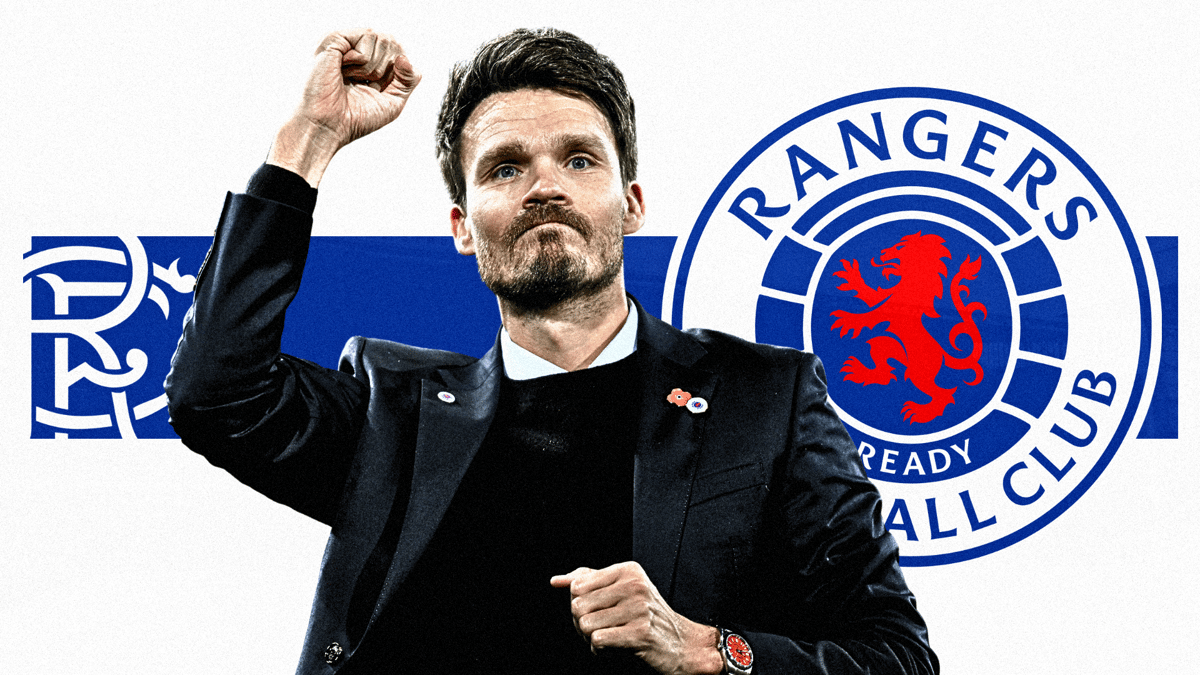
Danny Rohl has opened up on his decision to walk away from Rangers this summer in favour of a return to Red Bull Salzburg, insisting he has no regrets despite nearly pulling off a remarkable escape act at Ibrox and being widely expected to stay on for a second
Speaking from his new base at Salzburg’s Taxham training complex, with the Berchtesgaden Alps as a backdrop, Rohl reflected on a genuinely turbulent year that took him from crisis management at Sheffield Wednesday, to a chaotic rescue mission at Rangers, to what he now describes as the relative calm of Austria. It’s been a route few managers experience in the space of twelve months, and Rohl was candid about the toll and the learning that came with it.
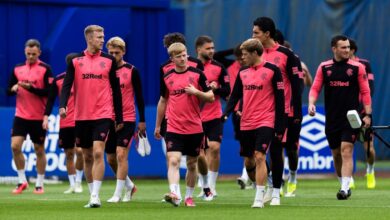
He was appointed at Ibrox to replace the sacked Russell Martin, arriving with Rangers languishing sixth in the Premiership having managed just one win in eight games — a genuinely dire position for a club of Rangers’ stature and expectations. What followed was, by Rohl’s own account and by results, a near-total turnaround. He steered the club back into title contention through the heart of the season, rebuilding confidence and results to the point where silverware and a genuine title challenge looked realistic. It was only a stumble at the very end — four defeats in Rangers’ final five matches — that ultimately dropped the club to third place and denied Rohl the fairytale ending his eight months in the job had appeared to be building toward.
Given how close he came, and given that he had been expecting — and was expected — to remain in the Ibrox dugout for a second season, Rohl’s decision to leave for Salzburg raised eyebrows. He addressed that directly, explaining that a call about Salzburg’s interest arrived while he was on holiday in June, unexpectedly changing his plans once again.
His explanation for the move centres on the relationship he built with Salzburg sporting director Marcus Mann, and the sense of possibility Mann communicated to him. He described being genuinely transparent and open with Rangers about how he felt throughout the process, while simultaneously finding that Red Bull Salzburg, and Mann specifically, gave him a feeling of what could be built there. Weighing the two, he said, led him to a clear personal conclusion: “Some people were asking why but I felt this is the right one now. I can confirm, it’s a good move.”
Importantly, Rohl was at pains to stress this wasn’t about any breakdown in his relationship with Rangers. He said he told both parties from the very first conversations that if no agreement could be reached, life would simply carry on as before, given the respect he holds for the Ibrox club — but that ultimately, he felt Rangers’ story with him “was not finished” in a different sense, and that a fresh start with a talented group of players in Salzburg represented too good an opportunity to turn down. He described seeing real possibilities in what Rangers could do in the upcoming summer transfer window, but weighing that against the appeal of beginning again from a clean slate with what he considers a high-quality squad already in place at Salzburg.
Part of Rohl’s comments touched on the lifestyle and cultural contrast between Glasgow and Salzburg — a contrast he clearly finds refreshing after the intensity of his Ibrox spell. He noted that comparisons between the two footballing environments are difficult, pointing out just how consuming the football conversation is in Glasgow specifically, joking about the sheer number of podcasts dissecting every match and the endless flow of opinion that comes with managing an Old Firm club.
By contrast, he described Salzburg as a place where he feels like a genuine part of the city itself, with loyal supporters but without the same intensity of public scrutiny — no “fan handshakes” in the street, as he put it, the kind of low-key anonymity that simply isn’t part of daily life at a club like Rangers. He’s used that relative calm to enjoy aspects of life he didn’t have time for during his whirlwind spell in Scotland, including a recent trip to see Jedermann, the centuries-old Hugo von Hofmannsthal play that serves as a centerpiece of the Salzburg Festival, now in its 106th year. His family remaining based in Leipzig, just a few hours from his new home, adds a further practical dimension to a move that appears to offer him considerably more stability and personal balance than his time in Glasgow did.
Rohl’s arrival at Rangers had itself come after a genuinely messy search process. Russell Martin, previously of Southampton and Swansea, had been dismissed after just 17 games in charge, having won only five, lost six, and overseen Champions League qualification failure alongside painful Europa League defeats — a reign that ended with Rangers eighth in the Premiership and, strikingly, requiring a police escort for Martin’s departure from his final match, a detail that speaks to the depth of fan frustration at that stage.
The search for Martin’s successor was chaotic in its own right. Steven Gerrard, the Ibrox legend who led Rangers to title glory in 2020-21 across 193 games in charge, was strongly links but ultimately ruled himself out, feeling the timing wasn’t right for a return. Rohl himself was reported at one stage to have dropped out of contention entirely, before talks were revived. Former Rangers player Kevin Muscat, then managing Shanghai Port in China, was also strongly linked, with his candidacy reportedly advancing before ultimately collapsing given his commitments in Asia. It was only after that chain of near-misses and false starts that Rohl’s appointment was finally confirmed, arriving with genuine Champions League pedigree from his time as an assistant under Hansi Flick at Bayern Munich and with the Germany national team, alongside earlier experience at RB Leipzig.
Whatever the messiness of his appointment, Rohl made an instant impression once in the building. He spoke, on arrival, of seeing smiles return to his players’ faces within his first couple of training sessions, describing the mood shift as an important early signal that the group could be turned around despite the difficult moments they’d endured under Martin. His first match in interim charge came in unusually demanding circumstances for a newly appointed manager — a Europa League away trip to Norwegian side Brann, thrown almost immediately into continental competition rather than easing in gently through a domestic fixture.
From there, results steadily improved. A run that included victories like a 3-0 win over Kilmarnock, in which Bojan Miovski scored twice either side of half-time before a stoppage-time strike from Tottenham loanee Mikey Moore sealed the points, moved Rangers to within six points of a Hearts and Celtic side then tied at the Premiership summit — genuinely remarkable progress given where the club had stood when Rohl first walked through the door. Even amid that improvement, Rohl remained candid in his public comments about the work still required, regularly referencing his close, ongoing dialogue with chairman Andrew Cavenagh about the reinforcements he felt the squad would still need to sustain a genuine title push.
What comes through clearly in Rohl’s reflections is an absence of bitterness on either side of the parting. He speaks of Rangers, in his own words, with real affection, alongside similarly warm words for Sheffield Wednesday, the club whose crisis he was brought in to manage before his path eventually led to Glasgow and now Austria. There’s no suggestion in his comments of a relationship gone sour, or of Rangers pushing him out — rather, a mutual, amicable parting driven by his own personal calculation about where the better long-term opportunity lay.
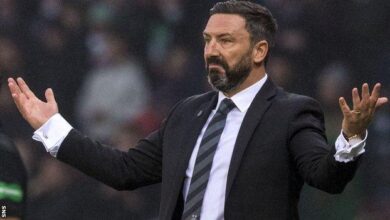
That calculation, at least from Rohl’s side, appears entirely vindicated in his own mind, several months on. Whether Rangers’ subsequent decision to appoint Derek McInnes as his successor proves similarly vindicated remains to be seen — but for Rohl himself, settled now among the Alps and the low-key rhythms of Salzburg life, the choice to walk away from unfinished business at Ibrox reads, in his own telling, as an unambiguously good one.