If there’s one thing uniting Rangers supporters in the aftermath of Thursday’s Conference League exit to Jablonec, it’s the sheer difficulty of finding new language for it. As one report put it, there are no words strong enough to adequately sum up the situation — partly because supporters have heard it all before, and partly because no adjective quite captures how this particular defeat feels.
The strength of feeling has come through clearly from those with the closest connection to the club. Former Rangers player and pundit Andy Halliday, working for Radio Scotland on the night, didn’t hold back describing what he’d watched. He admitted he didn’t even know what sport Rangers were trying to play in the Czech Republic, adding bluntly that what he’d seen “wasn’t even football” and that he genuinely didn’t know what he’d just watched.
That sentiment was echoed by Sky Sports pundit Kris Boyd, who labelled the defeat an “all-time low” for the club — a significant statement given Rangers’ European history includes the infamous 2017 loss to Luxembourg minnows Progres Niederkorn, a result long treated as the benchmark for continental humiliation at Ibrox.
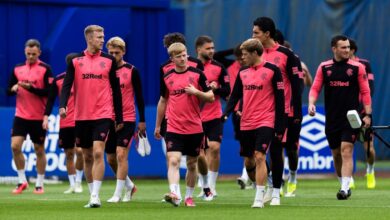
Part of what’s fuelling supporter frustration is just how bad the underlying performance data looked. Across the full 120 minutes in the Czech Republic, Rangers managed just one shot on target, held only around 46% possession, and won fewer than 70% of their tackles — numbers that paint a picture of a team second-best in almost every measurable category, not simply unlucky on the night.
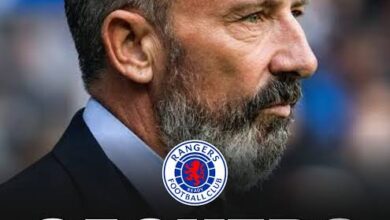
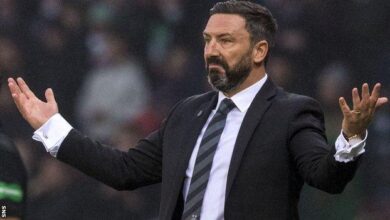
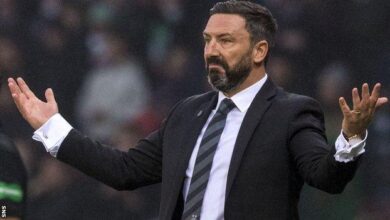
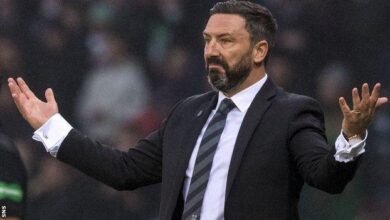
One assessment summed up the core problem in blunt terms: the team can’t defend, can’t create, and can’t score, and doesn’t appear to know what it is as a collective unit. That’s a particularly damning read for supporters to process, because it suggests the issues go beyond one poor night and speak to something more fundamentally unresolved about how the team is set up and organized under Derek McInnes.
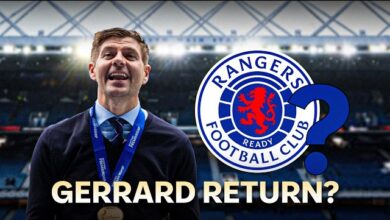
Reaction posted beneath match coverage has been unsparing. One fan comment called it an absolute disgrace and the worst European result in the club’s history, laying blame squarely on the signings and the people responsible for making those decisions, describing the club as bringing in “bang-average, overpriced players.” Another comment went straight for the manager, calling explicitly for Steven Gerrard’s return and arguing that McInnes has no clue how to manage a club of Rangers’ size, is out of his depth, and lacks any coherent plan — going as far as to suggest he’s making predecessor Russell Martin look good by comparison, a pointed jab given how unpopular Martin’s own brief reign had been.
A further comment, tinged with dark humor, simply asked whether any Rangers supporter present could recall having seen a worse Rangers team — followed by the resigned acknowledgment that it’s now domestic football only for the club this season.
Adding an extra layer of sting to the night was its timing and symbolism. The exit occurred on the very evening UEFA conducted the draw for the main Conference League competition in Monaco — meaning Rangers supporters had to watch the draw for a competition their club was no longer part of, a detail that only sharpened the sense of humiliation around the exit.
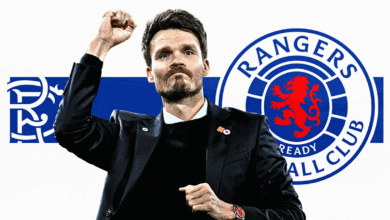
There’s also been a pointed comparison drawn with Danny Rohl, the manager Rangers let leave for Red Bull Salzburg over the summer. On the same night Rangers were suffering what’s being called a new European low, Rohl was overseeing a comfortable 4-0 aggregate win for Salzburg over Mjallby, sending his new club into the Europa League group stage. That contrast — the manager many fans were happy to see leave enjoying comfortable European progress elsewhere, while his replacement suffers one of the club’s worst-ever continental nights — has not been lost on the fanbase, and has become its own small but pointed talking point in the wider
Amid the anger directed at the manager and the recruitment strategy, there’s also been a notable gesture of accountability from within the squad itself. Captain Lawrence Shankland addressed supporters directly afterward, saying there haven’t been many occasions where he’s had to apologise to the travelling support, but that after Thursday night, the players owed the fans exactly that. He was candid in his assessment, saying the team simply wasn’t good enough to win the tie, and that having traveled with a one-goal lead, the objective was to capitalise on that advantage — something the team failed to do.
That kind of direct, unprompted apology from a captain isn’t a small gesture, and for some supporters, it’s offered at least a partial counterweight to the anger directed at the manager and recruitment department — an acknowledgment from within the playing squad that the display fell well short of what was required, rather than that responsibility rests solely with those picking or assembling the team.
What’s striking across the range of reaction is that supporters aren’t entirely unified on where responsibility should land. Some, as reflected in the comments above, point squarely at McInnes and question whether he’s equipped for the job. Others direct their frustration further up the chain, at the recruitment strategy and the decision-makers behind a summer of heavy spending that has yielded, in their view, players not good enough to perform under genuine European pressure. A separate strand of fan sentiment, reflected in past polling conducted after the earlier Jagiellonia Bialystok exit, put real weight on the players themselves failing to execute, rather than laying blame purely at coaching or recruitment.
That range of views — management, recruitment, and playing standards all drawing significant blame in different measures — suggests this isn’t a fanbase united behind one simple narrative, but one genuinely uncertain about where the deepest problems lie, even as the anger itself is close to universal
Much of the rawest emotion stems from the comparison with where this Rangers team stood only a few years ago. It’s been noted repeatedly, almost with disbelief, that this is a club that reached a European final as recently as four years earlier — the 2022 run to Seville that remains the high-water mark of the club’s recent continental history. The gap between that campaign and a team that, by multiple independent assessments, struggled to string four or five passes together against modest opposition, has become one of the most painful elements of the reaction — not just that Rangers lost, but how far the team appears to have fallen in such a comparatively short span.
**What Comes Next for the Support**
For now, supporters are left processing a result with no obvious modern precedent for how it should be discussed. There’s anger at the manager, anger at the recruitment department, renewed calls for Gerrard’s return, an unprompted apology from the captain, and a nagging sense — reinforced by Rohl’s continued success in Austria — that the club may have made the wrong call in letting its previous manager leave.
With Rangers now facing an entire season with no European football to soften the blow of a difficult domestic start, and a trip to Aberdeen looming as the next opportunity to change the conversation, the mood among supporters heading into that fixture is one of exhaustion as much as fury — a fanbase that has, in the words of one report, heard every version of this kind of post-mortem before, and is growing weary of having to find new ways to describe an old, familiar disappointment.