Rangers’ UEFA Disciplinary History: The Suspended Sanction Still Hanging Over the Club

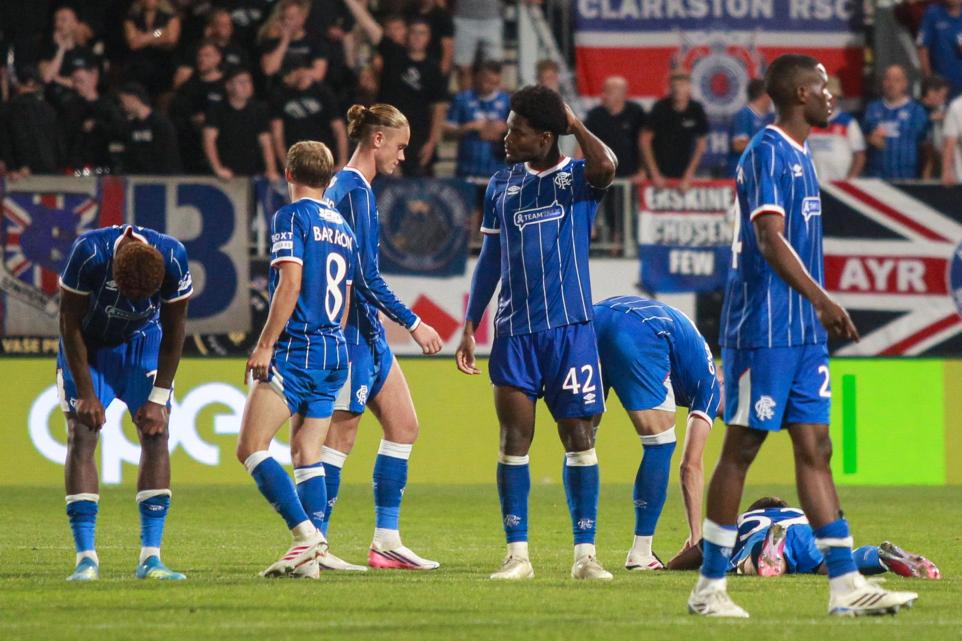
While there’s no evidence of any fresh UEFA punishment stemming specifically from the Jablonec tie, Rangers do have a live, active disciplinary matter with European football’s governing body — one that remains relevant precisely because of how these things work: suspended sanctions don’t disappear, they wait.
The case in question dates back to a Europa League fixture against Fenerbahce at Ibrox, when a section of Rangers supporters displayed a banner reading “Keep woke foreign ideologies out — defend Europe.” UEFA moved quickly, sanctioning the club with a suspended partial stadium closure: specifically, Rangers would be required to close the Copland Stand — the section of Ibrox known as the “Rangers end,” one of the most iconic and vocal areas of the ground — for one match, should there be any repeat of racist or discriminatory conduct from the club’s supporters within a two-year window. Alongside that suspended sanction, Rangers were fined €30,000.
The club’s own response at the time was notably strident. Rangers described the punishment as a “severe and significant reminder” aimed at what it called a small minority of supporters bringing the club’s name into disrepute, and confirmed it was in the process of issuing lifetime bans to those responsible for the banner. The club’s statement also acknowledged the broader stakes involved, noting that any future closure wouldn’t just harm the club’s reputation and finances, but would materially affect the team’s atmosphere and support in what could be a pivotal European fixture — with thousands of “innocent fans” unable to attend as a result.
Notably, UEFA’s ruling went further than just the banner itself, stating that “illicit songs” would also be treated as racist or discriminatory conduct for the purposes of any future action — broadening the scope of what could trigger the suspended closure beyond a repeat of the specific banner incident.
The relevant detail, in the context of everything that’s happened since — the Jagiellonia Bialystok exit, the Jablonec humiliation, the broader sense of a club under pressure on multiple fronts — is simply that this suspended sanction remains active. If Rangers supporters were to engage in any repeat racist or discriminatory conduct at a UEFA fixture within the two-year window from that original ruling, the Copland Stand closure would be triggered, likely without need for a fresh, lengthy investigation given the suspended nature of the original punishment.
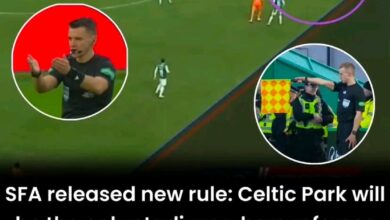
That’s a genuinely significant overhang for the club to be managing, layered on top of everything else currently unfolding — a struggling start under a new manager facing mounting pressure, a chastening European exit, and now a separate SFA sanction requiring both Rangers and Celtic to play their next home Scottish Cup fixture behind closed doors following the disorder at last season’s quarter-final. Rangers, in short, are currently operating under two distinct suspended disciplinary sanctions from two different governing bodies simultaneously — one domestic, tied to crowd safety and conduct in the Scottish Cup specifically, and one European, tied to discriminatory conduct in UEFA competitions.
It’s also worth noting this isn’t the first time Rangers’ European participation has intersected with conduct-related scrutiny. The club was previously involved in a separate UEFA investigation following allegations that goalkeeper Allan McGregor’s teammate Glen Kamara was racially abused by an opposing player during a Europa League tie against Slavia Prague — a case where UEFA ultimately ruled in Kamara’s favour regarding the original incident, before a related investigation into alleged discriminatory conduct during a subsequent Sparta Prague fixture was later dropped by UEFA’s Ethics and Disciplinary Inspector, who found insufficient evidence to proceed.
Taken together, these cases paint a picture of a club that has, at various points over recent seasons, found itself entangled in supporter-conduct and discipline issues at a European level — separate from and unrelated to on-pitch results, but part of the same broader institutional picture UEFA and the SFA are clearly monitoring
With Rangers now out of Europe entirely for the season following the Jablonec defeat, the immediate practical relevance of the suspended Copland Stand closure is reduced — there’s no UEFA fixture left this season at which it could be triggered. But the two-year window on that sanction doesn’t reset with elimination from the competition; it continues to run regardless of whether Rangers are actively playing in Europe, meaning the suspended punishment would still be live and enforceable whenever the club next qualifies for European competition, assuming the window hasn’t already expired by that point.
For a club already absorbing plenty of bad news in a short space of time, it’s a reminder that reputational and disciplinary consequences in football often move on a longer, slower timeline than the results and headlines of any single week — and that the fallout from past incidents can resurface at inconvenient moments, long after the news cycle has moved on to the next crisis.